Getting a tattoo is more than picking a design and finding an artist. What many people don’t realize is that the tools used during the process can have a big effect on the final look. One of the most important tools in any tattoo artist’s setup is the needle. These come in all shapes and sizes, and each type is suited for a specific kind of work. Whether you’re looking for sharp outlines, smooth shading, or something in between, the needle configuration plays a big part in making it happen.
Located in Buffalo, NY, Lucky Deville Tattoo Co is proud to offer high-quality tattoo work from seasoned professionals who take their craft seriously. Our artists understand the effect each type of needle has on ink distribution, healing, and overall appearance. That insight shapes how we bring each design to life, tailored to the vision and skin of every client.
If you’ve ever sat down for a tattoo and wondered why the needle felt different depending on the stage of the process, you’re not alone. Artists change needles often during a session because each one performs a different task. Understanding how these configurations work can help you have a better idea of what to expect when you get tattooed. It also gives you more appreciation for the skill behind the process and why technique and tools need to match.
Different Types of Tattoo Needle Configurations
Tattoo needles aren’t all the same. Some are made for crisp outlines, while others are better for filling in sections or soft shading. The kind of needle used affects how the ink is placed in the skin, how long your session might take, and how smooth or detailed the results are.
Here’s a breakdown of the most common needle types and how artists use them:
1. Round Liners (RL)
These needles are grouped in a tight circle and are used for sharp, solid lines. They’re ideal for detail work like fine lettering or strong outlines. One pass with a round liner often lays down enough ink that there’s no need to go over the same spot twice.
2. Round Shaders (RS)
Similar in shape to round liners but spaced slightly farther apart. These are used for soft shading and small bits of color filling. They can give a design gentle depth without sacrificing color saturation, especially in smaller areas.
3. Magnum Shaders (MG)
Positioned in two staggered rows, magnum shaders move more ink into the skin over a larger space. They’re great for large color areas and gradients. Used correctly, they produce smooth transitions and even texture, making them a go-to for full backgrounds and big bold fills.
4. Curved Magnums (CM)
A softer version of the magnum shader. With a curved edge, these allow a smoother glide across the skin, helping reduce trauma. Artists like them for designs that blend shading or require subtle transitions, often seen in realism tattoos or portrait work.
5. Flat Needles
These are aligned in a straight row and used mostly for strong lines and geometric patterns. They’re effective with solid color blocks or shapes that need clean, bold edges. They aren’t as versatile for shading but do their job well where structure and clarity are needed.
Many artists mix these throughout a single session. For example, a tattoo might begin with a round liner for the outline, shift to magnums or curved magnums for shading and background work, and rely on flats for any designed sharp edges or blocky sections. Each needle serves a clear purpose and helps create a tattoo with depth, clarity, and balance.
How Tattoo Needle Configurations Impact Tattoo Outcomes
Choosing the right needle makes a big difference in how your tattoo turns out. Some needles leave soft effects, while others are meant for bold, direct ink packing. The wrong combination can leave areas looking patchy or overworked, affecting how your skin heals and how the tattoo holds up over time.
Using round liners is all about clean edges. They’re critical for pieces that rely on definition like script or fine line work. If an artist used a shader instead of a liner for a detailed quote, the lines would likely blur or lack uniformity.
For artwork with complex shading or smooth fades, artists often rely on curved magnums or magnum shaders. These allow for smoother transitions without harsh breaks, especially helpful in pieces like black and gray portraits or nature scenes. When used right, these needles deliver stunning depth and realism.
Flat needles come into play for bold areas like stylized script or symmetrical designs. Used with steady hands, they lay sharp, contrasting lines that stand out clearly. If applied recklessly though, they can leave areas unevenly filled or cause more skin irritation.
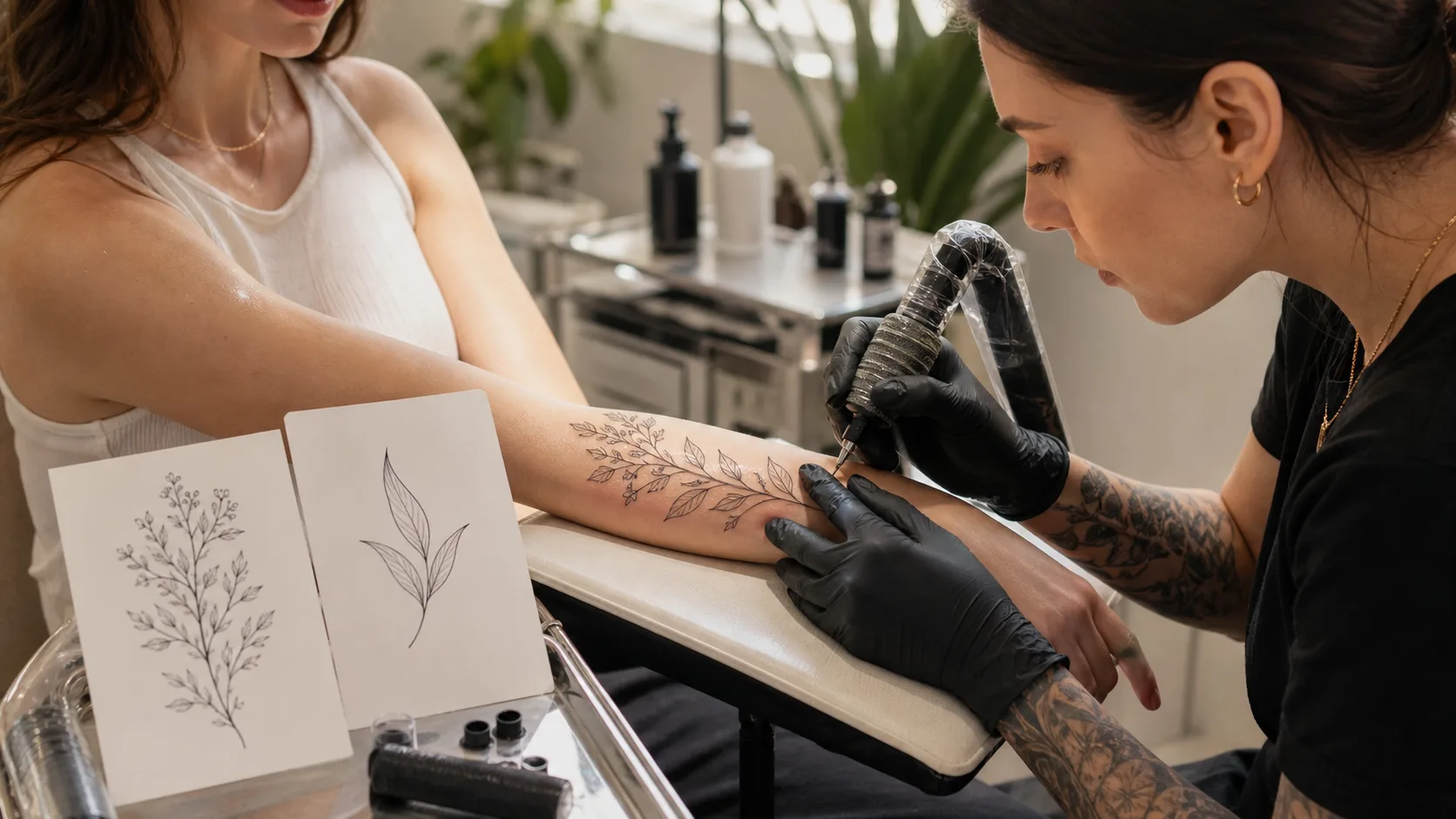
Usually, artists mix a few needle types throughout a single tattoo. That’s a good thing. It means they’re adjusting their tools depending on the needs of the design. Someone getting a Japanese wave tattoo might see their artist work with a round liner for fine details, switch to flat needles for wave crests, and then pull out magnums to shade in the water background.
Every change of the needle setup reflects thoughtful planning and care. Artists who understand their tools don’t randomly grab whatever is on hand. They choose with purpose, keeping the design’s visual goal and the client’s comfort in mind.
Choosing the Right Tattoo Artist
The outcome of your tattoo depends largely on the artist’s skill and how well they match techniques with tools. And one of the first signs of a good tattoo experience starts with needle knowledge.
If you’re searching for tattoo places in Buffalo, pay attention to how artists talk about their technique. Do they walk you through their process or just show off a flash sheet? Are they open about how they approach different styles, or just rushing to the first open spot?
Here are some good questions to ask before you book:
– What needle types do you use for different parts of my design?
– Do you switch configurations during the tattoo session?
– Can I see your healed work to check the clarity of lines and smoothness of shading?
– How do different needle types affect the healing process?
Artists who take the time to answer these give insight into not just what they do, but why. Their ability to explain how they make decisions shows respect for your time and body. It also reflects their own confidence and experience.
Buffalo has a wide variety of tattoo shops, but the artists who care about needle configuration stand out. They have often experimented with their process over years and have refined their approach to different skin types, design styles, and healing scenarios. That attention to detail shows in every piece they finish.
Why Needle Knowledge Makes the Difference
Tattooing isn’t just an art form. It’s also a skilled trade that relies on knowing which tools to use, and when. The right needle can lift the design and make it last, while the wrong one can break the design or lead to inconsistent results.
Top tattoo artists in Buffalo combine talent with technical understanding. They know how to make every line sharp, every gradient smooth, and every detail count by picking the right configuration for the job. That kind of awareness doesn’t just make the process better—it improves the entire experience, from consultation to healing.
You don’t have to understand needle groupings to the level of a tattoo artist, but knowing the basics gives you more trust in your choice. If your artist knows their way around different needle types and discusses why they’re making certain choices during your session, you’ll know they’re thinking about every inch of your design.
Tattoo quality is never just about the sketch or the stencil. It comes from a process that balances creativity with control. And the more your artist understands their tools, the better results you can expect down the line.
Getting a great tattoo takes more than talent—it takes the right tools and a deep understanding of how to use them. If you’re exploring tattoo places in Buffalo, Lucky Deville Tattoo Co makes sure each piece is done with care, technique, and the equipment that brings your idea to life exactly the way it should.