Geometric tattoos are built on balance, repetition, and clean lines. Still, skin is not a flat sheet of paper. A design can look perfectly even in a reference image, then shift slightly when it wraps around a shoulder, bends over an elbow, or follows the curve of a rib.
That does not mean something has gone wrong. A strong geometric tattoo does not need to look identical from every angle to look polished and intentional. We help clients focus on the viewing angle, placement, movement, and overall flow that will make their tattoo feel right on their body.
Turn Imperfect Symmetry Into Intentional Art
Symmetry is often the main appeal of geometric tattoos. Mandalas, sacred geometry, mirrored animals, linework patterns, and circular designs all rely on visual order. Once a stencil is placed on skin, though, natural anatomy can change how those shapes read.
You may notice uneven spacing in the mirror, lines that seem to shift when you turn, or shapes that look different with your arm raised. Areas with frequent movement tend to create the biggest changes, including:
- Shoulders and upper arms
- Ribs and sides
- Knees and elbows
- Wrists and ankles
- Calves and biceps
Those changes are not always flaws. The body stretches, compresses, twists, and relaxes all day. Our artists account for that before tattooing begins, so the design has balance where it matters most in real life, not just in a flat drawing.
At Lucky DeVille Tattoo Co., we approach custom work with both precision and realism. A tattoo should respect the design concept, but it also needs to fit the person wearing it. That may mean changing spacing, softening a hard edge, or adjusting one side so the whole piece looks more natural.
How Geometric Tattoos Respond to Body Movement
A circle on a rounded shoulder may appear more oval from certain angles. A straight line across ribs can look different during a deep breath than it does when you are standing still. Even two matching designs on opposite arms may not look exactly alike because the human body is not perfectly symmetrical from side to side.
This is especially important with bold lines and highly detailed patterns. Small changes can stand out more in geometric tattoos because the eye expects order. Instead of forcing a stencil to behave like it is on a flat surface, we study how the placement moves.
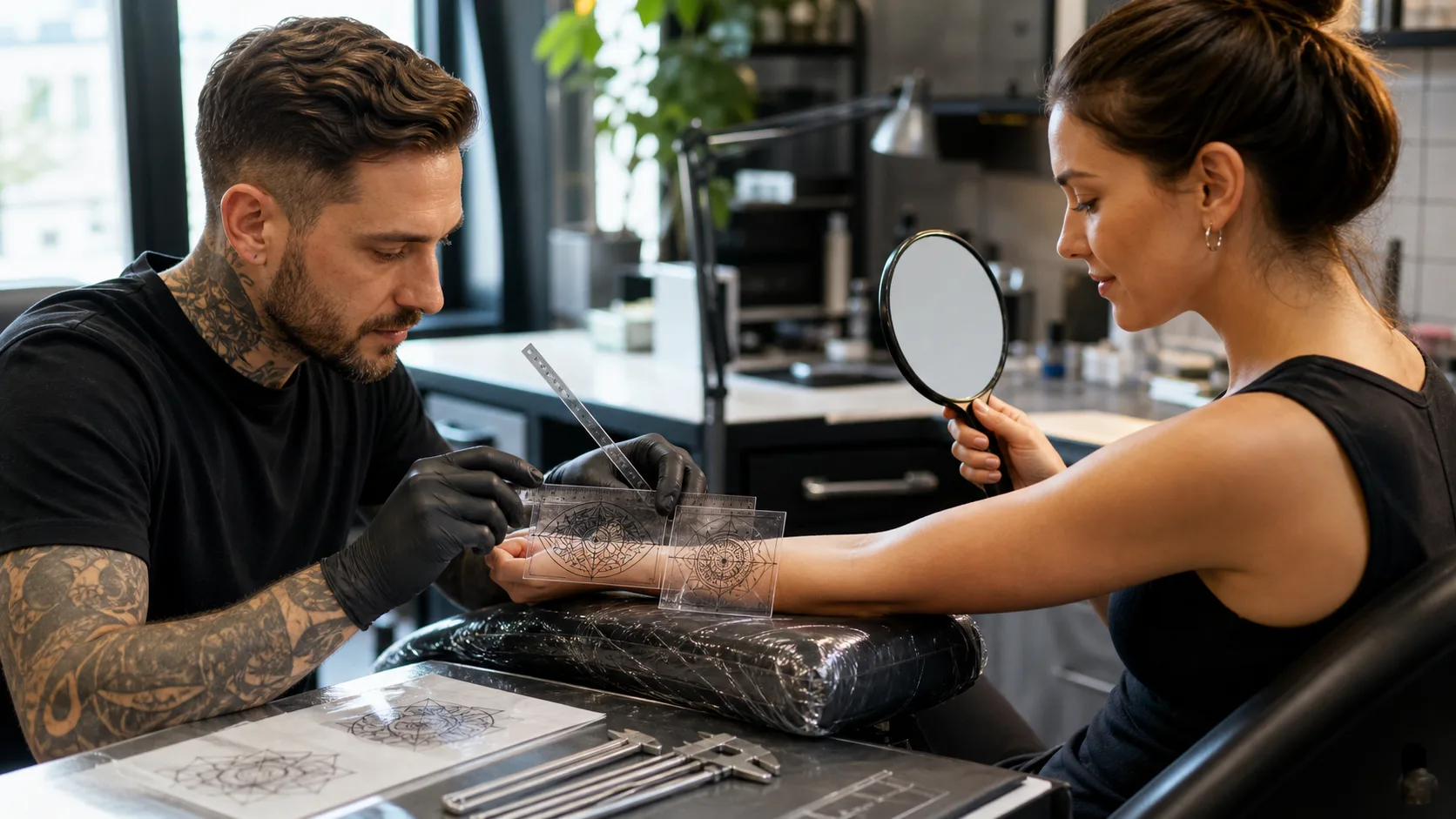
Before a design is finalized, we may check it with the body in more than one position. We look for the natural centerline, the direction of muscle movement, and the angle you are most likely to see every day. For example, a forearm tattoo may be designed to look strongest when your arm is relaxed and facing forward, rather than when your wrist is fully turned.
The goal is not to promise that a tattoo will stay frozen while your body moves. The goal is to make sure the design feels balanced, readable, and intentional through normal movement.
Use Intentional Asymmetry to Preserve Visual Balance
There is a big difference between accidental imbalance and intentional asymmetry. Accidental imbalance can make a design feel awkward, unfinished, or disconnected from the placement. Intentional asymmetry gives the eye somewhere natural to travel, even when both sides cannot be exact copies.
Custom geometric tattoos can include subtle design choices that protect the overall composition:
- Dotwork that fades one edge into the skin
- Abstract shading that softens a strict border
- Botanical details that follow the body’s curve
- Celestial imagery that breaks up mirrored shapes
- Varying line weights that guide the eye across the piece
A perfectly mirrored design may not be the best fit for a scar, an existing tattoo, or a muscular area that changes shape when flexed. In those cases, we can redraw the artwork around the body instead of treating anatomy like an obstacle.
That is one reason custom work matters. Rather than copying a stencil onto an uneven surface, we can adjust the composition to suit your preferred viewing angle and the natural structure of the placement. The final tattoo can still feel geometric and clean while looking like it was made for you.
Smart Redesigns for Existing Geometric Tattoos
An older geometric tattoo can start to feel less balanced over time. Fading, stretching, body changes, rushed linework, or an original placement that did not account for movement can all affect the way it looks. Fortunately, an uneven tattoo does not always need a full cover-up.
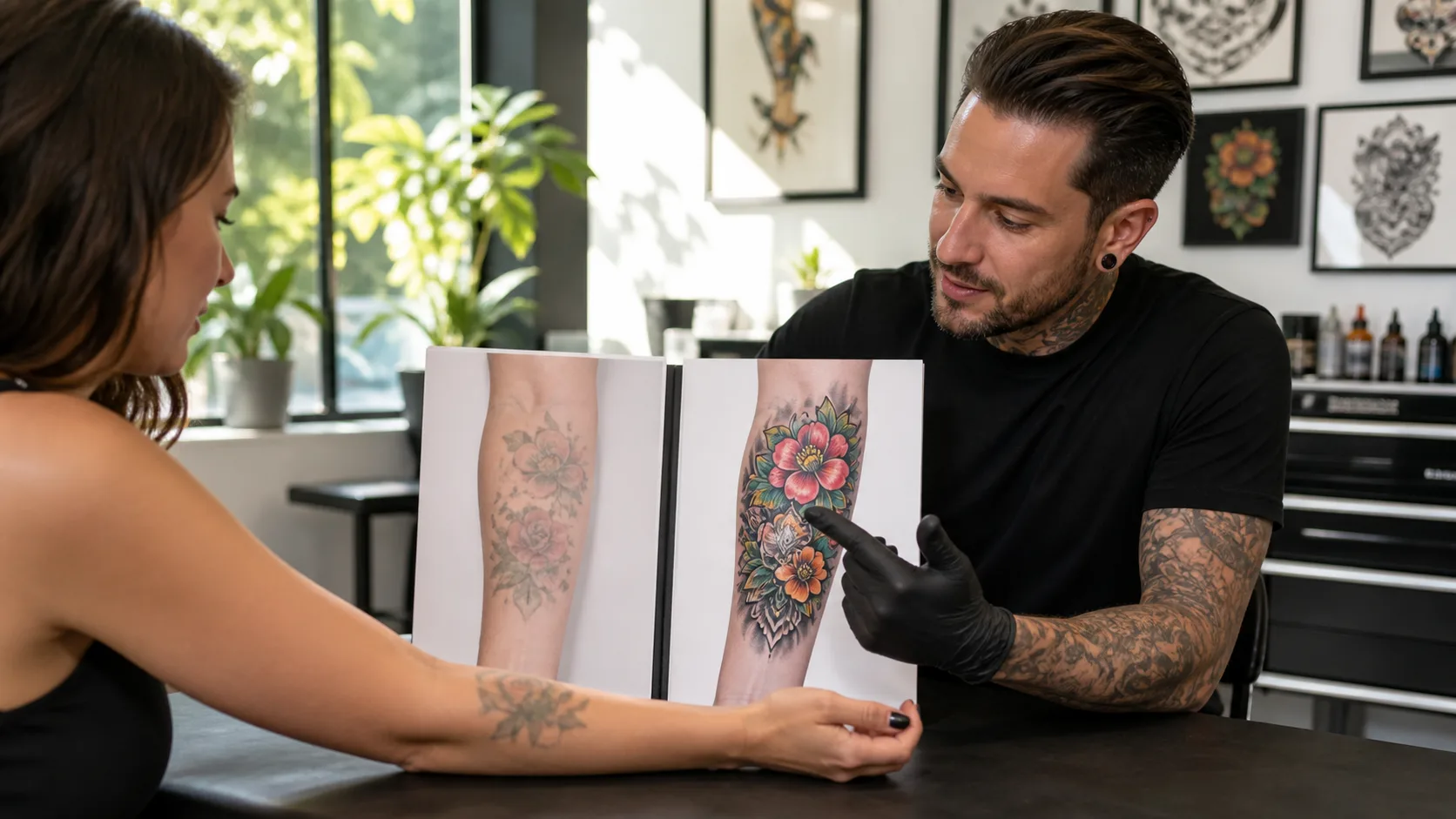
In some cases, adding to the tattoo creates a better solution than hiding it. Complementary shapes can expand a small piece into a larger composition. Dotwork, stippling, blackwork, or background shading can create contrast and pull attention away from a line that no longer feels straight. An asymmetrical frame can also make an existing design look like part of a larger plan.
We start by considering what you still like about the tattoo. Maybe the center shape is meaningful, the placement is right, or certain details are worth keeping. From there, a redesign can build around the strongest parts instead of erasing everything.
A cover-up may be the better choice when original lines are severely uneven, very faded, or difficult to blend into new artwork. In other situations, fading through laser treatment may be worth considering before a new piece is created. A professional design review can help clarify whether reworking, expanding, fading, or covering the tattoo offers the cleanest long-term result.
Fall Planning for Geometric Tattoo Work
Autumn can be a comfortable time to think about larger tattoos and multi-session geometric work. Cooler weather may make it easier to limit direct sun exposure during healing, but Buffalo and Western New York fall weather also brings jackets, heavier fabrics, and dry indoor air.
Fresh tattoos still need room to heal comfortably. Friction from sleeves, waistbands, or layered clothing can be irritating, especially for detailed work on the arms, ribs, or shoulders. Planning ahead also gives you time to think through design scale and placement instead of rushing a complicated piece for a holiday gathering or winter trip.
Detailed geometric tattoos benefit from patience. The right design should still look strong when you move, age, view it in a mirror, or see it from across the room. Symmetry is one part of that result, but thoughtful placement, clean line quality, and custom adjustments often matter just as much.
Bring Your Geometric Vision To Life
At Lucky Deville Tattoo Co, our artists can help translate your ideas into a design that fits your anatomy and personal style. Browse our geometric tattoos artists to find the right creative match for your next piece. We’ll work with you to build a tattoo that feels intentional from every angle.